The life of the magazine over 35 years — from the first conversations among friends in 1969 to the transfer of its archive to Sacramento State in 2006.
← Back to the California Journal Project
There is a vision and a dream at California Journal. The vision is that public policy journalism will increase civic participation and improve the opportunity for quality decision making. The dream is about a magazine that fits that role with unique coverage about the issues we face together as Californians.David Lesher, Editor · January 2004
A chronology of the magazine’s life, punctuated by covers from milestone issues across its thirty-five years in print.
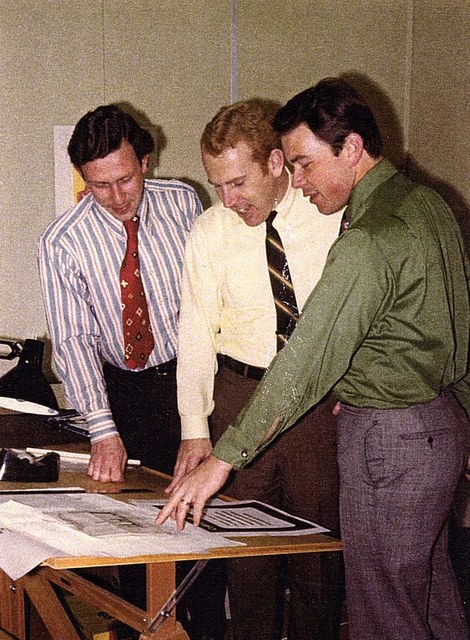
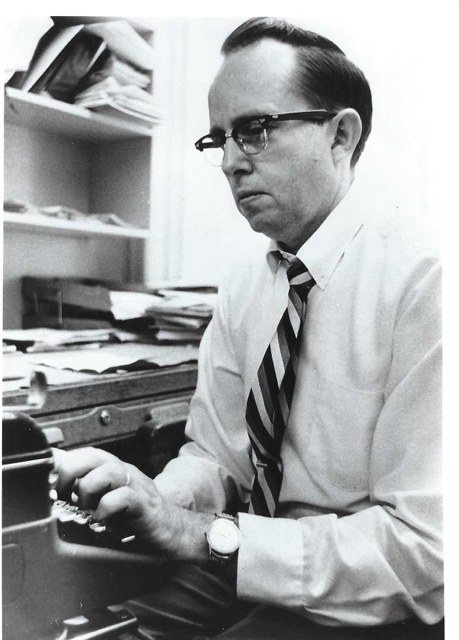
The idea for a magazine to provide independent, non-partisan reporting on California state government and politics began in discussions among Jud Clark, Tom Hoeber, Vic Fazio and Lou Cannon, who felt a monthly publication could fill the need for more comprehensive reporting than was possible in the daily news cycle. The concept, formalized in a prospectus published by California Research (the founders’ partnership firm), set forth the features, financing and practices to make the new publication a highly-respected record of state government and politics that can also serve as a reliable source to encourage civic engagement. Ideals take a back seat to getting the first issue to press and placing a circulation promotion in the mail. Assembly Sergeant-at-Arms Tony Beard is welcomed as the first $10 charter subscriber.
The first issue published using a ‘month in review’ format and distinctive blue color scheme, and marked by the general absence of bylines characteristic of the early years. Hoeber was editor in chief. Jerry Evans, soon followed by Bill Geyer and Mike Wenstrom, joined the partnership and served as associate editors. Cannon, who had moved to a new position in Washington, D.C., pioneered a feature that would endure until the final issue — a column called “Letter from Washington.” It was the first of more than a hundred articles he would write over the magazine’s life. A letter from then-Governor Ronald Reagan welcomed the magazine to the Capitol community.
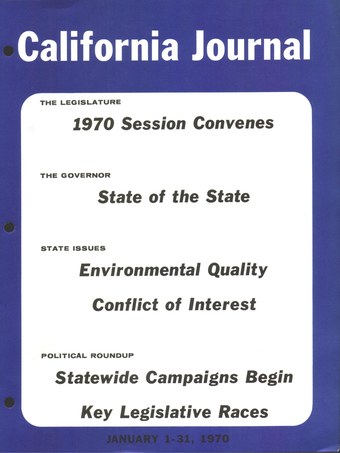 January 1970
With the second issue an advisory board is introduced, chaired by Eugene C. Lee, director of UC Berkeley’s Institute of Governmental Studies and including among others state librarian Carma Leigh and League of Women Voters president Anne Rudin. Several Journal friends including Jim Schoning and Ron Robie provide issue critiques. Co-founders produce feature articles and month-in-review records such as roll call votes. Hoeber begins acquiring expert knowledge of circulation promotion and library subscriptions. Gay Clark becomes the first circulation manager, serving for seven years and handling subscription records manually as circulation tops 15,000. The Journal Roster and Government Guide is included as a detachable insert in the March issue, providing the first publicly available contact information for legislators and other public officials.
The Journal’s second year sees the first California Government and Politics Annual, beginning more than 20 years of publishing selections gleaned from the previous 12 issues. The Annual is designed for classroom use in high schools and colleges. Hoeber edits the Annual and is joined in later years by co-editor Charles M. Price, Chico State University political science professor. The first anniversary is also a farewell for Fazio, who is selected by newly-elected Assembly Speaker Bob Moretti to head the Democratic caucus staff. Fazio, soon to be elected to the Assembly and then Congress, often recalls creating the Journal’s first district-by-district 1970 election analysis as a career highlight.
Midway through the second year, circulation was not increasing fast enough to meet production costs and the magazine’s survival is in jeopardy. All options for potential funding are pursued. A potential lifeline comes in a telegram from the Ford Foundation saying “Do not suspend publication; we are interested in exploring grant support.” Hoeber and Clark head to Ford’s New York offices to begin an extensive effort to obtain grant funding. During this time, critical contributions come from Friends of the California Journal who provide loans to keep publishing issues. Among the friends is now Appellate Court Justice Ron Robie, and wife Lynn; Robie notes he felt it was important to do, adding that the loan was fully repaid.
The Ford Foundation awarded multi-year funding to continue publishing the magazine and to establish a non-profit center offering other educational programs. A new entity — the California Center for Research and Education in Government — is established, separated from the California Research partnership. Hoeber and Evans served as officers; Clark remained a director while Geyer and Wenstrom continued as associate editors.
The second-anniversary issue is the first published by the California Center. A Board of Directors was established with Lee as chair. Other founding directors included mayors Tom Bradley of Los Angeles, Norm Mineta of San Jose and Pete Wilson of San Diego, academic Bernard Hyink and AAUW president Rosellen Kershaw. Lee and Kershaw remained board members for several decades. During this period, Bruce Keppel, a reporter for The Sacramento Bee, is hired as the magazine’s first professional journalist. Additional Ford funding to support the magazine and civic education programs is secured through matching grants, the initial one through Journal friend Richard Wilson, co-trustee of the Michael J. Connell Foundation. The Journal’s internship tradition also begins and extends over the life of the magazine, with many CJ interns pursuing successful journalism careers. Among them is author and Washington Post columnist Max Boot.
Ed Salzman of the Oakland Tribune became the second Journal editor, serving for the next 10 years. Jan Castle was hired as the first art director. Hoeber continued as publisher. A Center study of media coverage of the 1974 gubernatorial election, with San Francisco journalist Mary Ellen Leary, resulted in her book “Phantom Politics” (1977). Hoeber collaborates with capital public television station KVIE to produce a weekly show called California Journal, broadcast in 1974 and 1975 on 11 public stations throughout California.
With passage of Prop 9 (the Political Reform Act) and election of Governor Jerry Brown, the Journal adds a series of new voter information publications. The California Journal Press publishes the first of continuing editions of The California Political Action Handbook, Sacramento Political Visitor’s Guidebook, Campaigning in California (edited by Chip Nielsen, managing partner of Nielsen and Merksamer), Legislative District Maps, an annual Index to make the Journal a handy reference source, and the first biennial California Journal Almanac of State Government and Politics (edited in early editions by Salzman and later by Sacramento Bee columnist Dan Walters and Journal editors A.G. Block and Claudia Buck). Lou Cannon’s “Reporting: An Inside View” is also published by the Journal Press in 1977.
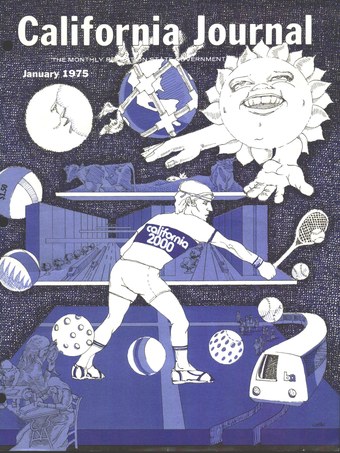 January 1975
Following passage of Proposition 13, the Tax Revolt Digest was launched, providing two years of monthly coverage of the initiative’s impact.
The Journal’s 10th Anniversary issue looks both at the past and the future. Hoeber writes a retrospective celebrating that growth in circulation had reached 19,000, making the magazine self-supporting without assistance from grants. He also posts an Honor Roll recognizing those who contributed to the magazine’s first decade and announces the internship program had been named to honor longtime Journal friend Frank Mesple, who taught political science at U.C. Davis. Looking to the future, Hoeber notes that circulation has leveled over the past two years while costs continued to rise, pointing to the need for new sources of funding. Cannon joins the board and also devotes significant time through the years to mentoring the Journal’s editorial staff.
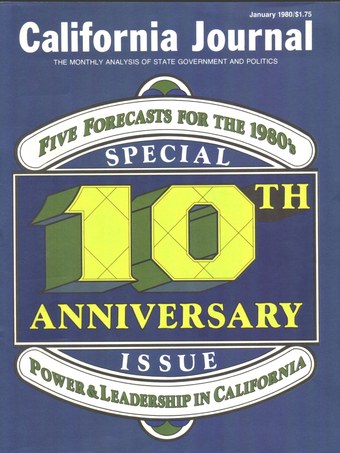 January 1980
A new Capitol fundraising tradition is introduced with Speaker Willie Brown serving as honoree of the first California Roast — a role he would accept again in 1995, then emcee a 2004 event honoring recently elected Governor Arnold Schwarzenegger. The first Capitol Focus civic engagement program began, led by Jim Muldavin. Over the years Capitol Focus gave hundreds of high school students an opportunity to experience the capital firsthand. Chris Van Overloop becomes art director and serves for 8 years. The Journal returns to public television with producer Joan Reiss creating a series of half-hour programs on state issues, broadcast in 1983 and 1984.
Robert Fairbanks of the Los Angeles Times becomes editor, serving for two years. Alice Nauman continues as a part-time managing editor. After leaving the Journal, Fairbanks launched The Morning Report as a must-read for Capitol insiders.
A.G. Block is hired as managing editor. He became editor in 1995, his tenure with the magazine eventually stretching 22 years, until the final issue.
The Journal’s 15th Anniversary issue contains congratulatory letters from then-Governor George Deukmejian and former Governor Jerry Brown, who penned “Great Work!” beneath his signature. Hoeber published a “Letter from the Publisher” that recounts the magazine’s 15-year history and announces a new effort is underway to support the Journal and the Center’s civic education programs. Sacramento State president Don Gerth and his wife Beverly host a kick-off fundraising effort.
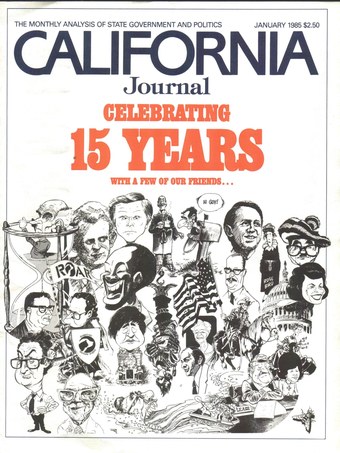 January 1985
Richard Zeiger of the Riverside Press-Enterprise succeeded Fairbanks, becoming the fourth editor. He served for 10 years before moving to state government, later overseeing the state’s largest agency as chief deputy Superintendent of Public Instruction. In November the first full-color cover is introduced to expand advertising options.
A decline in grant funding led Hoeber to assemble a group of investors to return the magazine to private-sector legal status as California Journal, Inc. With Muldavin as executive director the California Center remains a nonprofit and continues the California Roast and Capitol Focus, as well as additional new initiatives. Muldavin retires in 2019, having served 37 years from the founding of Capitol Focus; the California Center for Civic Participation’s youth-focused civic education work continues today.
On its 20th Anniversary, four California governors — Pat Brown, Ronald Reagan, Jerry Brown and George Deukmejian — write essays on the significance of California as a state and as an idea. They were joined by a noted group of policy and political analysts exploring the future of education, health care, the environment, the economy, demographics, justice and the courts, and civic participation. Hoeber renews the Center and Journal commitment to its civic education goal through the magazine, CJ Press publications, and the addition of new California and 50-state Directories co-published with State Net, and a seminar program hosted by Rod Tuttle. Bill Hauck, executive vice president of State Net, chair of the board, Chip Nielsen, Joanne Kozberg and others join the board to support new fundraising efforts.
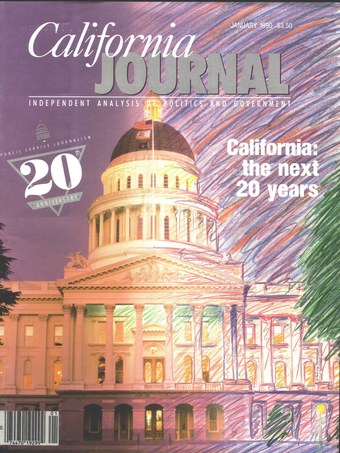 January 1990
California Journal merged with State Net, successor of the consulting firm that owned the Journal at its inception; the two jointly published a two-volume 50-state directory as part of an effort to expand online publishing. Clark served as president, Hauck and Cannon as officers, and Hoeber as publisher.
Conflict over the 1990 reapportionment and the first court-mandated reapportionment provides the impetus for Journal editorial staff to produce its first and only weekly reporting, to fully cover fast-breaking developments in the Legislature and courts. Dagmar Thompson becomes Art Director, serving more than 13 years and until the final issue. Tim Foster, now executive director of Open California, becomes Journal circulation manager and later advertising representative.
An identity is given to the Journal’s longstanding practice of rating Capitol figures — Block calls the ratings the “Minnies,” after the goddess Minerva, who appears on the state seal. For the next decade legislators often tout this recognition.
To mark a quarter century of work, the Journal asks 14 distinguished experts to weigh in on the meaning and future of the California Dream. Among those who write essays are Lou Cannon, William Kahrl, Kevin Starr, Mollie Lowery, Richard Reeves, Maxine Waters, Mary Ellen Leary, Leo Estrada and Barry Gifford. In April 1995, Block is promoted to editor, becoming the magazine’s longest-tenured editor.
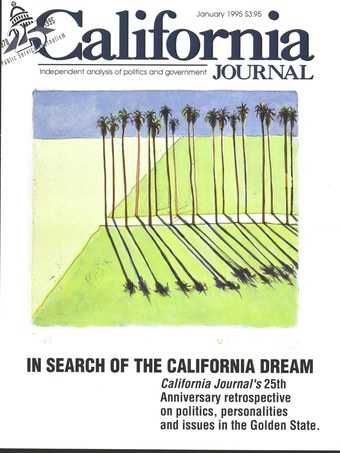 January 1995
The Wall Street Journal attempted to use California Journal’s name on a regular special section devoted to California issues, but was denied in an opinion by Judge Earl Warren, Jr., who cited the magazine’s “considerable public importance.” The decision was upheld on appeal.
Hoeber retired, and a major celebration was held to honor his career. Dignitaries on hand included Phil Isenberg, John Burton and Pete Wilson.
In anticipation of its 30th anniversary, the Journal publishes a special issue identifying 30 Californians who made the most impact on the state during the 20th century, including two giants of U.S. history: Ronald Reagan and Earl Warren. Among others are Phil Burton, Willie Brown Jr., Pat and Jerry Brown, Harvey Milk, Tom Bradley, Hiram Johnson, Harry Bridges, Ed Roybal, John Muir, Dianne Feinstein, Jesse Unruh, Artie Samish, Upton Sinclair and Rose Bird. Their bios are penned by the likes of Lou Cannon, John Jacobs, Ed Cray, Susan Rasky, Bill Stall, Kevin Starr and Sherry Bebitch Jeffe.
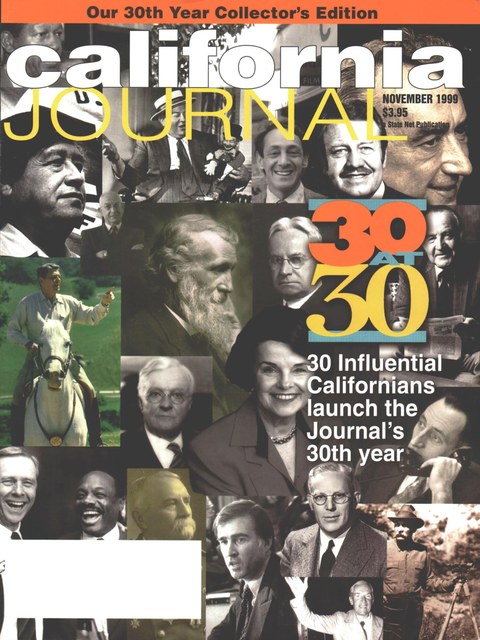 November 1999
The anniversary issue is entirely dedicated to the expanding political, social and cultural influence of the state’s Latino community, focusing on the potential impacts of its growing political power. Dave Lesher, formerly with the Los Angeles Times and The Sacramento Bee, becomes editor, serving for two years. He subsequently co-founded and served as editor and publisher of CalMatters. The CJ Weekly becomes the Journal’s first non-print publication, and Rich Ehisen — now managing editor of Capitol Weekly — becomes its editor in October 2002; he subsequently becomes managing editor of the State Net Capitol Journal, covering 50 state capitols and now published by LexisNexis.
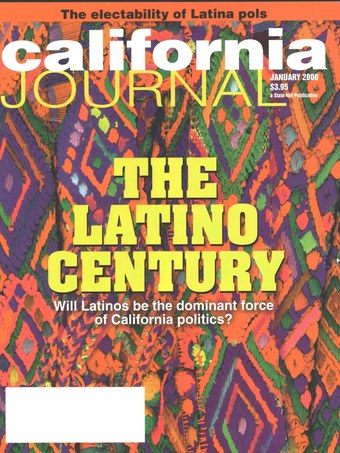 January 2000
State Net announces new ownership is needed to secure the Journal’s future. Cannon agrees to lead an effort to explore all options and is joined by long-serving directors Hauck, Nielsen, Kozberg and former Governor Pete Wilson.
The California Center for Research and Education in Government is formed, with Cannon as president. The July issue celebrates the magazine’s complete history as part of the campaign to save it.
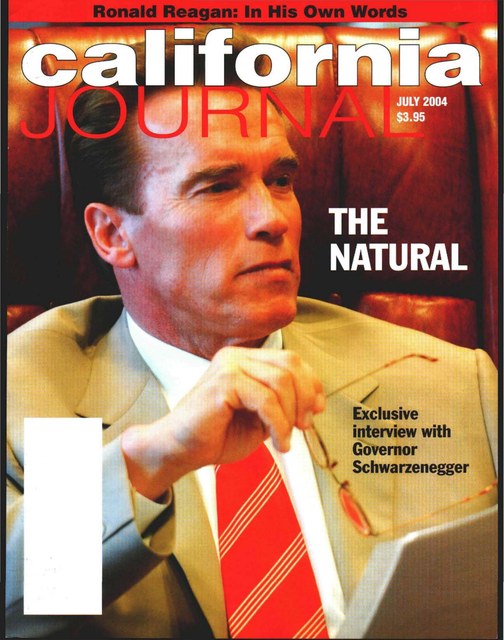 July 2004
The 35th-anniversary issue announces the magazine is “suspending publication,” with the hope that an opportunity will be found to revive it. In a frank letter to readers, Cannon and Block ask for support and indicate the level of funding needed to publish for another year. They pledge to continue their effort because “As a rare and independent voice in the California political wilderness, the Journal deserves to survive.”
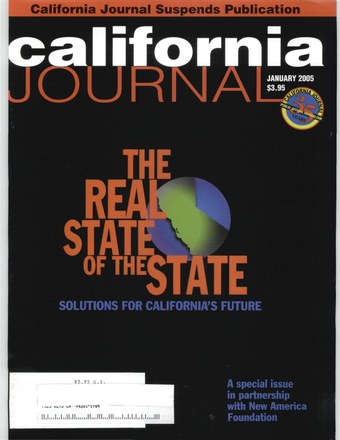 January 2005
Failing to find options to revive the Journal, Hauck signs a donor agreement with California State University, Sacramento, to take ownership of the California Journal assets and archives. Today the collection is held by the Donald and Beverly Gerth Special Collections & University Archives at Sacramento State, which owns it and has granted permission to make its reporting available as this digital archive.